You open two proposals. Both promise a modern website. Both show a few attractive homepages. One costs more, but you can't tell what the extra money buys. That's a hard way to choose the person who will build your next customer's first impression of your business.
I'm Zach, the person behind Adsori in Morton. If you're choosing a web designer in Peoria, IL, use these questions to compare the work behind each quote. They apply to businesses in East Peoria and across the area, too. I'll give you my own answers at the end.
1. What will your Peoria web designer build the site to do?
Start with the work you want more of. Do you need quote requests, booked visits, phone calls, or purchases? Pick the main action, then ask the designer to show how someone gets there from your busiest service page.
For example, if you repair furnaces, a customer should be able to check your service area and find the call button without digging through your company history. A business that sells custom work may need a form that accepts photos and job details. Those are different builds.
Before the call, write down your main service, the towns you serve, and the questions people ask before booking. Bring that list. Ask who will write the page copy and who will supply photos. If that work falls to you, it belongs in the timeline.
My Peoria web design service starts with that page and content plan. Get it settled before choosing layouts.
2. What will I own, and what can I take with me?
Ask whose account holds the domain name and who can renew it. Your business should have access to its own domain account. Ask the same question about hosting, analytics, and any booking tool that the site uses.
Then separate ownership from portability. You might own your words and photos while the website itself depends on a builder subscription. That's worth understanding before you choose a platform. Ask what can be exported, what would need rebuilding, and whether there is a charge to leave.
Get the answer in the proposal: which accounts you control, which work you own, and what you receive at handoff. Include any limits on stock photos, fonts, or other licensed assets. A promise that you own everything needs enough detail to be useful.
3. What does SEO included actually mean?
SEO means helping search engines find and understand your pages. In a website quote, the phrase can cover very different amounts of work. Ask for the actual deliverables: page planning, titles, useful service copy, internal links, and checks that the finished pages can be indexed.
For local work, ask how the pages will explain your services and coverage area. A Peoria business that also serves East Peoria needs accurate details about that coverage. Adding town names to a footer doesn't answer a customer's question about whether you will take their job.
If this is a redesign, ask what happens to your existing page addresses. Google's site-move guidance calls for mapping old URLs to their replacements and setting up redirects where needed. Put responsibility for that work in the scope before old pages disappear.
Also ask which work ends at launch and which work needs a separate plan. Google's hiring guide warns against promises of first place in search results. A designer can commit to specific work and checks; a new website alone doesn't settle where you will rank.
If search is part of the job, review the scope for local SEO in Peoria alongside the website quote. You need to know who owns the work after launch.
4. Can I test the site on my own phone before launch?
Ask for a working preview you can open on your phone. Start on a service page, read the details, tap the phone number, and try the contact form. Check whether the menu blocks anything and whether you can read the text without zooming.
Try the form with a missing required field, too. Can you tell what needs fixing? When you send a clearly labeled test inquiry, does it reach the right inbox? A message that says success on the screen is only half the check.
Ask how keyboard access, form labels, and text contrast will be checked. You shouldn't have to name every technical standard to get a usable site. Write the review steps and the person who handles fixes into the launch plan.
5. How will I know whether the site brings in work?
Ask the designer to show what the report will count. Page views tell you that pages were visited. You also need a way to check whether people asked for a quote and whether those inquiries became jobs.
Keep the labels honest. A tap on a phone link is not proof that a call connected. A submitted form may be spam. Agree on what each number means, who checks inquiry quality, and how you will record booked work.
You can start with a simple monthly review of forms, calls, and your own job records. If the proposal includes paid tracking software, ask what it costs and who controls the account. Before launch, test that the agreed events appear in the report and that you can access it yourself.
For ongoing marketing, my Local Lead Engine reporting process connects the monthly review to the work being done. Website inquiries and search positions need separate labels so you can tell what changed.
6. What does web design in Peoria cost, including upkeep?
Ask for the build fee and recurring costs on separate lines. Hosting, domain renewal, software subscriptions, maintenance, and content changes should each have a clear place in the quote. Compare the same scope across proposals.
Then ask about an ordinary change: you add a service or need to update your hours. Can you do it yourself? If the designer handles it, is that included, billed by the hour, or sold as a separate job?
Ask who you contact when something breaks and when they will respond. Put backups and recovery in the scope. Add up the build and the ongoing fees before you compare quotes.
7. Can you show relevant work, and do I need this much website?
Open the actual websites in a designer's portfolio. Ask what they built, what problem they were hired to solve, and how the owner updates the site. If they claim more leads, ask how those leads were measured and whether other marketing changed at the same time.
The work doesn't have to match your business exactly. Look for evidence that the designer understands how your customers choose and can explain the choices on the page. Ask for a reference who can speak to communication and support after launch.
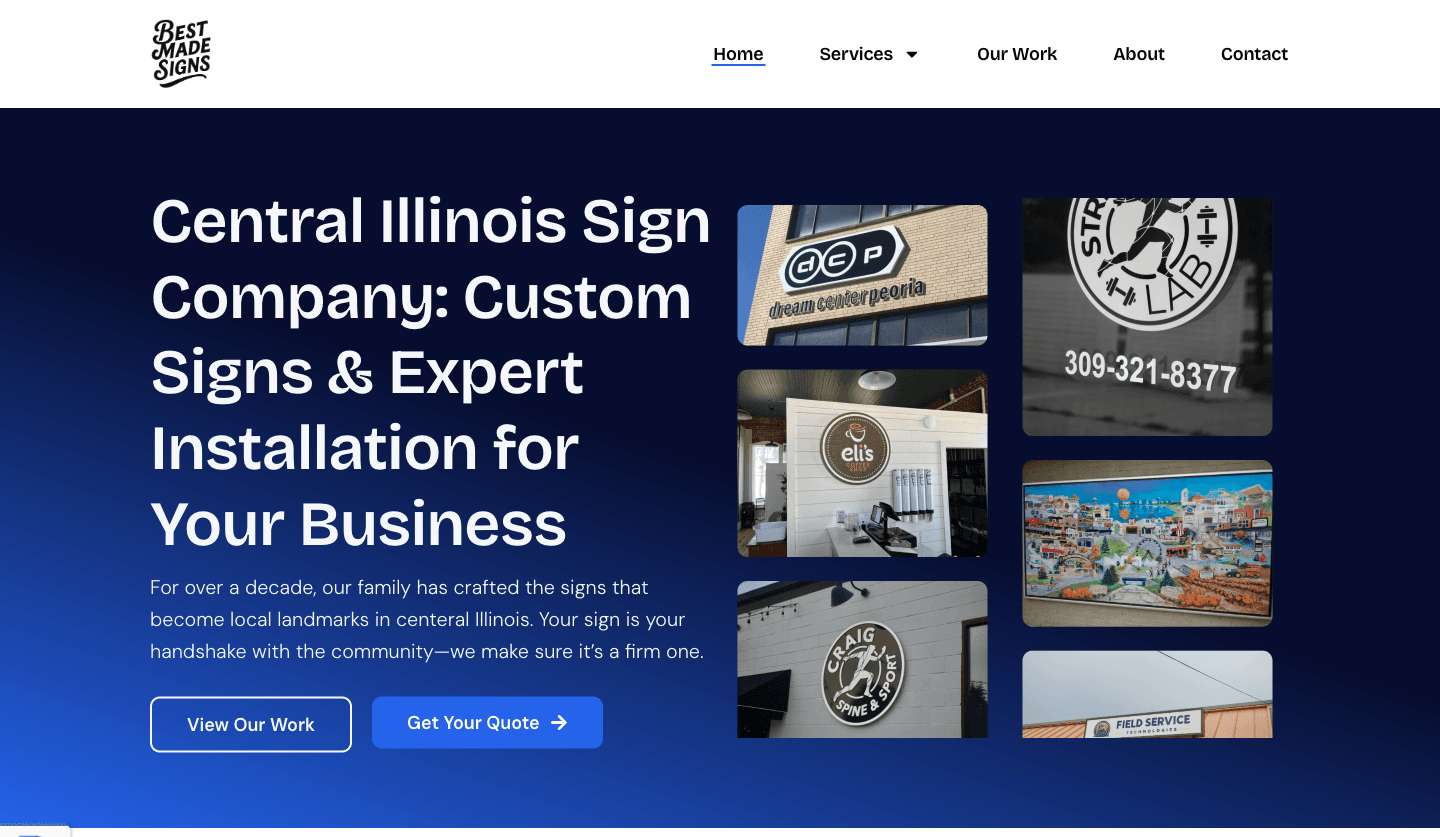
The screenshot above is a site I built. The Best Made Signs case study shows the website as part of the broader local-search work. It would be misleading to credit a redesign alone for the full result.
An AI builder or a DIY template may be enough if you need a simple site and have time to write, check, and maintain it. Before choosing one, confirm that it supports your forms, editing needs, and account access. Test the finished pages just as you would a hired build.
Paid help is easier to justify when you need someone to plan the content, handle a migration, connect tools, or take responsibility for keeping the site useful. Ask which of those jobs your quote covers. You should be paying for work you need.
Keep this checklist beside your proposals.
- The main customer action and the pages that support it are clear.
- Domain access, ownership, and handoff terms are written down.
- SEO deliverables and any redirects are named in the scope.
- You can test the preview on your phone before launch.
- Inquiry tracking is defined, tested, and accessible to you.
- Recurring fees, change requests, and support terms are clear.
- You have seen relevant work and understand why this build fits.
If an answer is missing, send the question back before paying. Give each designer a chance to explain. A clear reply tells you something about what working together will be like.
How I answer these.
You should ask me the same questions. Here is where I stand when I build your site.
- Purpose: I start with the services you want to sell and the action a customer needs to take. We agree on the page plan and who supplies the words and photos before the build.
- Ownership: you hold the domain account. I don't keep ownership of your site or your content. You get the project files and account access; third-party fonts, photos, and software still follow their own licenses.
- SEO: the website scope includes clear page titles and descriptions, useful service content, internal links, a sitemap, and checks that the pages can be indexed. If old URLs change, I include the redirect plan. Ongoing local SEO and Google Business Profile work have their own agreed scope.
- Review: you get a working preview before launch. I check the phone layout, links, and forms, then you review it before I publish.
- Measurement: we define the inquiry actions to track and test the agreed setup. You have account access. I don't count a phone-link tap as a booked job.
- Costs and support: I put the build scope and ongoing fees in writing. We agree on who handles updates and what happens when you need a change.
- Fit: I'll show you work I built and explain the choices. If a simpler site covers what you need, I'll tell you. The quote should earn its cost.
Already holding two quotes? Send them to me with a few lines about your business and what you want the site to do. I'll point out what's missing so you can ask better questions before paying.
Plan a website that helps customers reach you.
Helpful Google resources
- Google's advice on hiring an SEO: Questions about relevant experience, communication, and realistic expectations.
- Google's SEO Starter Guide: A plain starting point for understanding what search work involves.
- Google's guide to changing website URLs: Why a redesign needs a plan for existing pages and redirects.